.png)
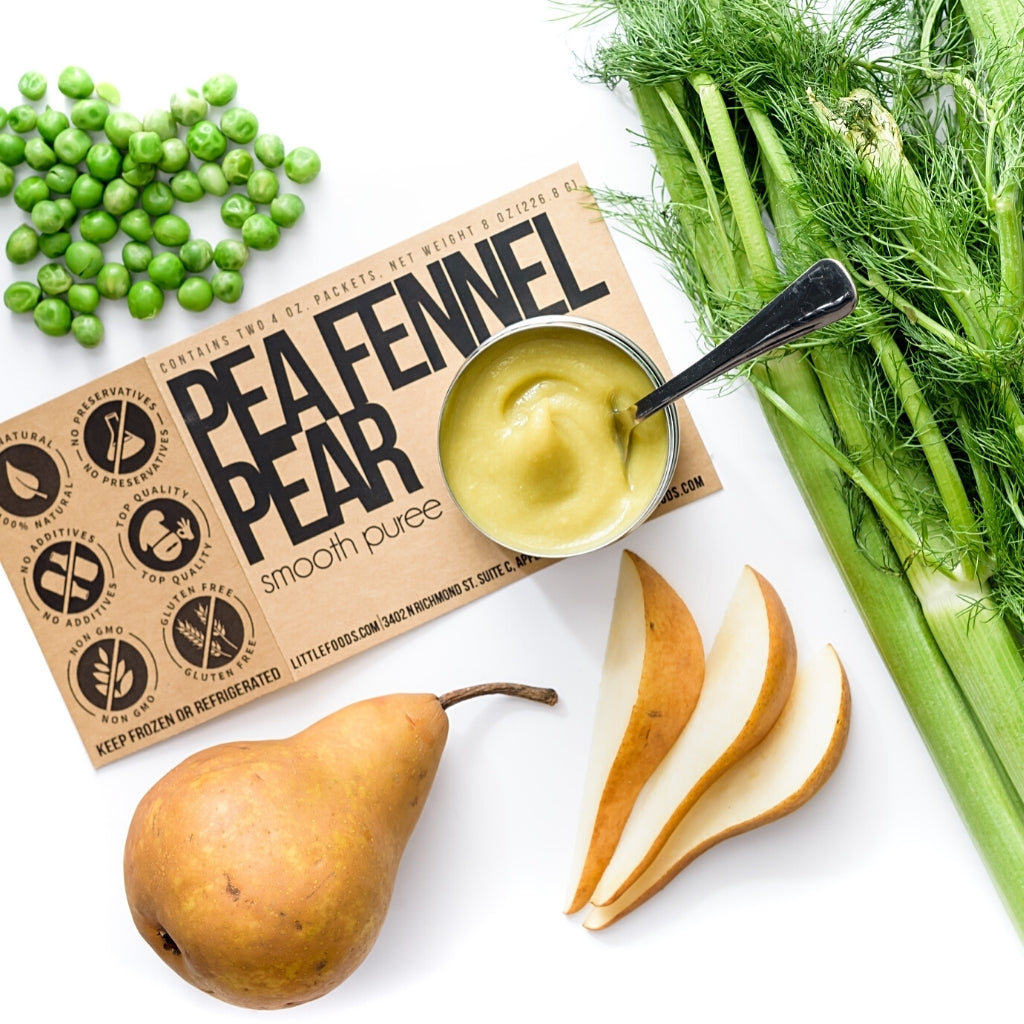
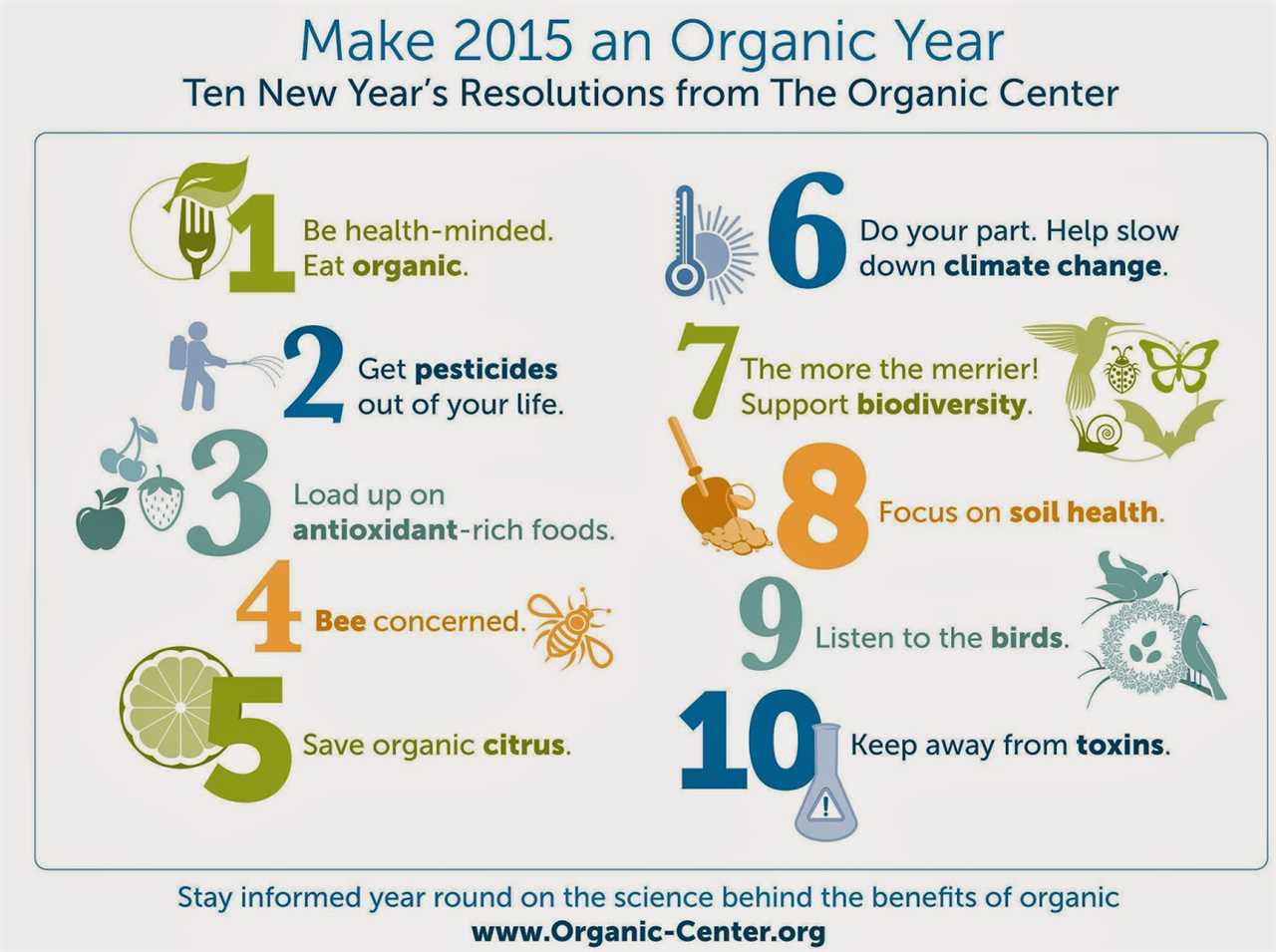
Organic baby food is produced and processed without the use of synthetic pesticides, antibiotics or growth hormones. These substances can cause serious damage to your child's health and development.
Meat and dairy from organic sources is also free of added hormones that farmers often feed to their animals to increase their yields. It's also safer for your little one because it avoids the use of antibiotics that can lead to drug-resistant bacteria.
What is the difference?
Many parents choose organic food for their children, believing it is better for them and the environment. It is also more expensive than non-organic options, so it is important to shop around for the best deals.
The main difference is that organic foods are grown without pesticides or synthetic fertilizers, so they are less likely to contain chemical residues. They are also free from artificial colours, flavourings and sweeteners and any genetically modified ingredients.
There are other differences too, such as whether a product contains added vitamins and minerals. For example, fortified cereals, which often contain iron, are not allowed in organic versions.
Another concern is that non-organic foods can be contaminated with heavy metals, which can have adverse effects on your baby’s brain development and IQ. Cadmium, for example, is found in large amounts in routine baby foods.
Why choose organic options for infant health and development?
Organic options are a great way to give your baby the healthiest start possible. They are free from harmful chemicals, genetically modified (GMO) foods, antibiotics and hormones.
Buying organic is also an excellent way to protect your child from pesticides, fungicides, herbicides, and insecticides that can cause irreversible damage to their tiny brains and bodies. This is especially important during their first year of life, when their bodies are still developing and are less able to digest, metabolize, and excrete these toxic substances.
When choosing organic foods, make sure that the label reads “organic” or “USDA certified.” This ensures that the food is free from any chemical residues and has been regulated. If you are not sure, contact a local organic farmer or your doctor for more information.
How can I ensure my baby is getting the best nutrition for their growth and development?
Your baby's nutrition plays an important role in their development. This is especially true when they are first starting solids.
Introduce new foods one at a time and watch for any reactions in your baby like diarrhea, vomiting or a rash. When you do, stop feeding that food and call your doctor.
You should also introduce nutrient-dense complementary foods other than breast milk or infant formula to your baby. These include foods from all major food groups - fruits, vegetables, whole grains, protein and dairy products.
Ensure that your baby is getting all of the nutrients they need in small quantities at each meal. Your baby's stomach is too small at this age to eat large quantities of food.
Your baby should get all the calories they need from breast milk or formula until around 12 months. After that, they can start to eat full-fat dairy foods such as milk, cheese and yoghurt. These provide protein and calcium, which they need to grow well.
What are the best organic baby food options?
When it comes to baby food, there are many different options available. Whether you choose to make your own or purchase ready-made organic foods, it's important to make sure you're using fresh and nutrient-dense ingredients.
RDs recommend making sure your little one gets a healthy variety of fruits, veggies, whole grains and other key nutrients as they grow. This is especially true if your baby is prone to allergies or intolerances.
Another option for busy moms is to choose pre-made organic baby foods. These foods can be made from simple, easy-to-prepare ingredients and come in a wide variety of flavors.
Once Upon A Farm is our top pick for this category because they offer delicious, smart blends that are certified organic and non-GMO. Their products are also Clean Label Project Purity Award winners and contain no added sugars.
Frequently Asked Questions
What is organic beef?
Organic meat is organic food that has been grown naturally without the use of pesticides, artificial fertilizers or hormones. It also means that the animals weren't fed any genetically modified feed. It is safe to eat because it doesn't contain any harmful chemicals.
Organic meats are better for the environment. Organic foods reduce pollution in rivers, lakes and landfills. We can also help wildlife by eating organic foods. Organic farmers do not often use toxic chemicals that can kill birds or insects.
Buy organic meats whenever possible. This is the best way for you to eat healthy, organic meats. Local shopping helps keep more money in your community than it does out of state. Local businesses often pass down savings to customers when they shop locally. Shopping locally keeps American jobs in America, rather than sending them abroad.
What is organic food?
Organic produce is grown without pesticides, synthetic fertilizers, sewage sludge, irradiation, genetic engineering, or confinement feeding. No growth hormones are used. Animal testing is also not done. These crops can be grown naturally by farmers, and they don't need to be treated with chemicals to control pests or weeds.
Organic farming practices help maintain soil quality and reduce erosion. Organics contain more nutrients than regular food and are therefore better for our overall health. Organic products tend to be higher in fiber and lower fat than conventionally produced foods.
Are organic foods better?
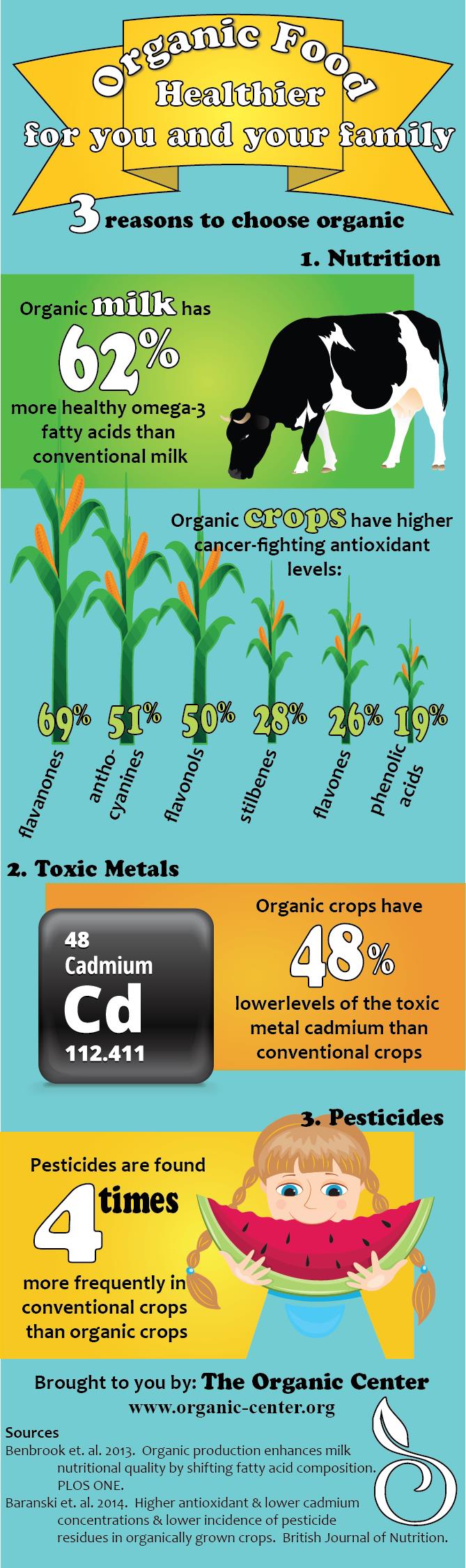
The Environmental Working Group's most recent report on pesticide residues found in food shows that organic fruits and veggies had almost half the pesticide content of non-organic. The Environmental Working Group found that organic apples contained eight-times less pesticides than other non-organic fruits, and organic strawberries had fourfold more than their conventional counterparts.
Another study suggests that organic food can reduce exposure to toxic metals such as lead and mercury. For example, one study showed that children who ate organic meat had 33 percent lower blood lead levels than those who didn't consume organic meats. Another study concluded traditional fish should not be consumed by pregnant women, due to high mercury levels.
Organic food is generally safer than non-organic. Experts recommend that fresh produce and vegetables be used whenever possible to reduce your chances of developing cancer.
Do organic foods offer health benefits?
Organic foods may not be healthy for everyone. They can be beneficial for your health if you eat them often.
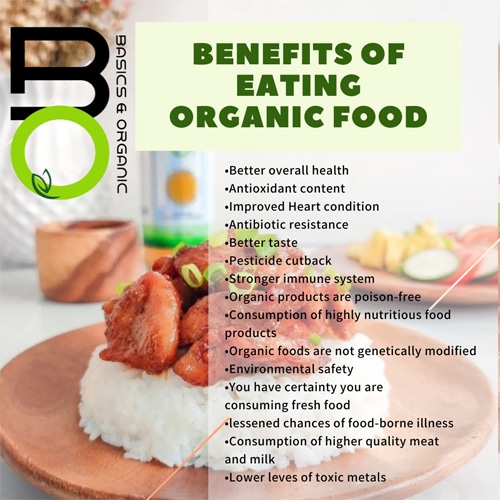
Organic food is produced without artificial fertilizers, pesticides, herbicides, fungicides, hormones, antibiotics, or genetic engineering. This means that organic produce is grown without harmful chemicals that could harm human health.
Also, there are fewer additives that are used in processing. So when you buy an organic product, you're likely eating healthier than non-organic products.
Studies have shown organic foods have more nutrients and antioxidants that conventionally grown fruits, vegetables.
Even though organic farming methods can be more costly than conventional farming methods they are often more productive. When farmers grow crops organically, they encourage soil fertility and biodiversity.
This helps preserve water resources and prevents erosion. Organic farms require less fuel and energy because they don't contain toxic chemicals.
Some people fear that organic foods can be more costly than conventional foods. Prices will vary depending where you live. For example, organic apples tend to be more expensive than traditional apples.
But if you look at the total price of a basket of both types of fruit, you'll see that buying organic is cheaper.
Should you buy organic?
It depends on you. Organic food is not for you if you don’t like it.
Organic food can be purchased if you like good-tasting food. Organic foods are safer than conventional food because they don't contain chemical pesticides or fertilizers.
Organic agriculture conserves the environment and promotes biodiversity.
Is organic the same as pesticide-free?
Organic food is organic and free of pesticides. This means that organic food is often free of pesticides and fertilizers.
Because organic produce is free of harmful additives, it also has more nutrients than conventionally grown foods.
The USDA National Organic Program requires that organic farming practices be followed by farmers.
These guidelines address soil preparation, crop rotations, pest control, water conservation, harvesting, and other practices.
Organic farming methods are also beneficial for wildlife and natural habitats.
Statistics
- Nutrients like omega-3 fatty acids were up to 50 percent higher in organic meats and milk than in conventionally raised products.[3] (en.wikipedia.org)
- According to a study performed by consumerreports.org, organic products, compared to non-organic products, ranged anywhere from 13 percent cheaper to 303 percent more expensive. (en.wikipedia.org)
- Once certified by the USDA, it can fall into one of four categories: "100 percent organic", "organic," "made with organic ingredients," or "made with less than 70 percent organic ingredients. (en.wikipedia.org)
- Popular clothing brands, like Patagonia, are labelled as organic by using 100 percent organic cotton for many of their styles. (en.wikipedia.org)
External Links
ota.com
ncbi.nlm.nih.gov
- PubMed: Evaluation of the micronutrient content of plant foods grown using conventional and organic agricultural methods.
- Comparison of the total and ascorbic Acid content of freeze-dried and frozen-dried marionberry, strawberries, and corn grown according to conventional, organic, and sustainable agriculture practices - PubMed
sciencedirect.com
- The impact of organic food on human health: Assessment of the status quo, prospects for research - ScienceDirect
- Technical Note: Simultaneous carotenoid- and vitamin analysis of milk coming from total mixed ration-fed cattle optimized for xanthophyll discovery - ScienceDirect
doi.org
- Occupational Pesticide Exposures and Cancer risk: A Review: Journal of Toxicology and Environmental Health Part B Vol 15, No 4
- Genetically modified food safety and public concerns: a review by Journal of Food Science and Technology
How To
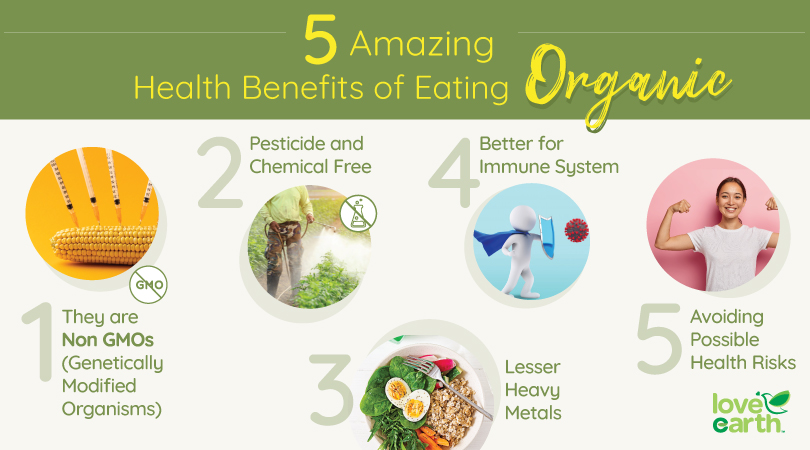
5 Reasons to buy organic products
Organic foods do not use pesticides or synthetic fertilisers. They do not contain genetically modified organisms (GMOs), or radioactive ingredients. They are not made with sewage sludge, industrial solvents, or any other chemical substances. The food's natural environment is protected from contamination during its growth cycle. It does not contain artificial preservatives or additives. No hormones or antibiotics are used. They are also produced in conditions that preserve their nutritional value and freshness over longer periods.
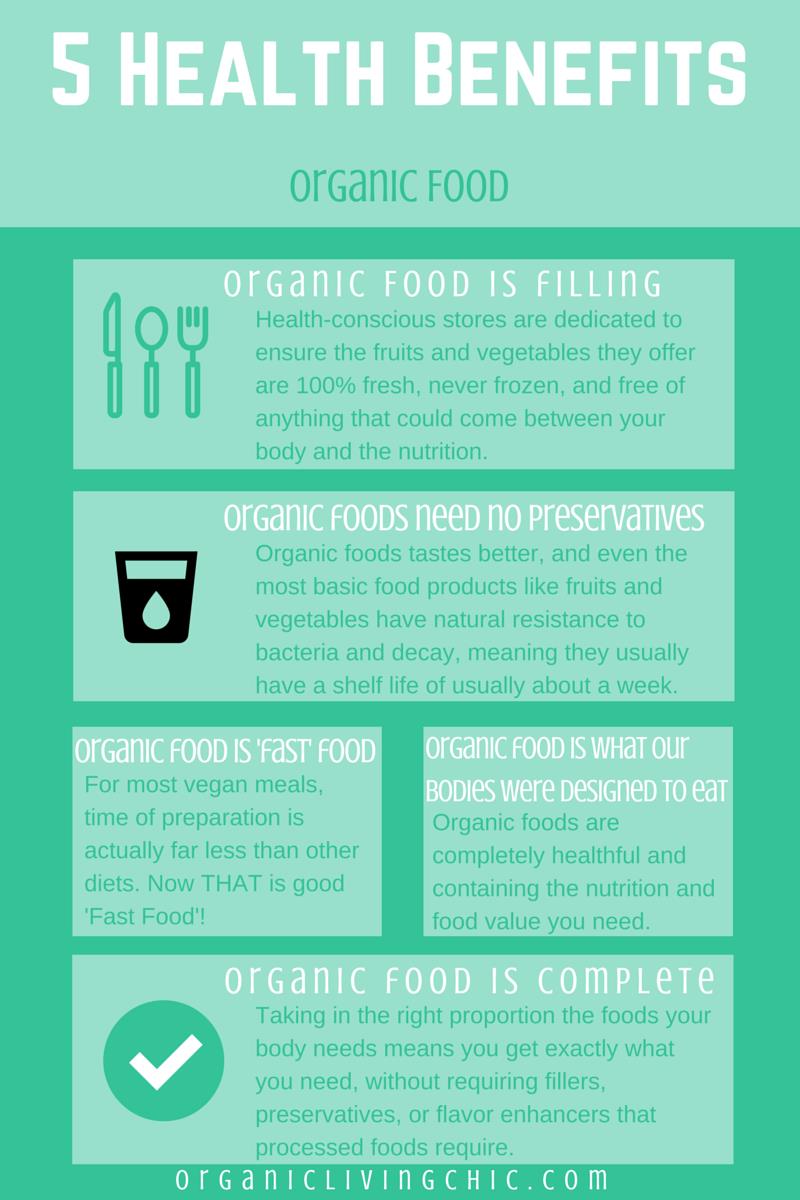
- Health benefits. Nonorganic produce has more chemicals than organic. Organic produce is healthier. This means that organic produce is less likely cause allergic reactions and sensitivities. This means you're also consuming less toxic and carcinogens.
- Eco-friendliness. Organically grown produce doesn't require synthetic fertilizer or pesticides. Organic farms are located far from cities where there is a lot of pollution, because they require so much energy to grow. This reduces air pollution.
- Sustainability. Organic farming relies more on soil fertility than chemical fertilizers. This results is healthier soils with higher organic matter. Farmers should rotate crops and let the land go bare periodically to improve soil health. Farm animals that eat only grasses, grains and no antibiotics develop strong immune systems.
- Taste. Traditional fruits and vegetables are often bland due to the fact that they are picked at peak ripeness and shipped long distances for grocery stores. Organic produce is more rich and sweetened because it was harvested when it was still unripe.
- Nutrition. GMOs are harmful chemicals found in many conventional processed foods. Avoid these harmful chemicals by eating whole foods, such as meat, eggs and fish, seeds, legumes, fruits, vegetables, herbs, and beans.
Resources:
 |
Nuts and SeedsNuts and seeds are nutrient-rich crunchy tidbits that add a protein, fiber and healthy fat punch to meals and snacks. They’re also a great source of.. |
 |
Organic Food For A Six Pack? The TRUTH About Organic vs Conventional Foods!Get ripped and keep your strength: http://goo.gl/uLzHn6 Hey guys, it's Clark over at Six Pack Shortcuts and today we're gonna talk about organic vs |
 |
Organic vs Conventional Produce - The Dirty Dozen & Clean 15 ExplainedClick https://skl.sh/flavcitywithbobbyparrish to get 2 months of Skillshare for FREE! Here is a full review of the dirty dozen fruits and vegetables and |
 |
Are Organic Foods Really Healthier?It's widely believed that organic foods are more nutritious and safer than non-organic foods, even though the evidence is far from clear. Food certified as |
 |
Are GMOs Good or Bad? Genetic Engineering & Our FoodAre GMOs bad for your health? Or is this fear unfounded? OUR CHANNELS German Channel: https://kgs.link/youtubeDE Spanish Channel: |
 |
How the food you eat affects your brain - Mia NacamulliView full lesson: http://ed.ted.com/lessons/how-the-food-you-eat-affects-your-brain-mia-nacamulli When it comes to what you bite, che […] |
|
Is Buying Organic Food Worth The Cost?Subscribe to Goodful: https://bzfd.it/2QApoPk Goodful Goodful Feel better, be better, and do better. Subscribe to Goodful for all your healthy self care |
 |
Benefits of Choosing Organic Gluten-Free OptionsIf you’ve been diagnosed with gluten sensitivity or celiac disease, you know how hard it can be to avoid foods containing wheat and other grains. But |
 |
Joseph Wang LIVE (Bank Bailouts and Moral Hazards Deep Dive)buy my stuff Come to rebel capitalist live at https://rebelcapitalistlive.com Check out my private, online investment community (Rebel Capitalist Pro) |
|
Organic Farming and Soil HealthOrganic farming practices promote soil health through crop rotations, symbiotic associations, cover crops and minimum tillage. These management.. |
|
Research Reveals How Your Body Reacts When You Eat Only Organic FoodsThere is a growing belief that organic foods are healthier for us than non-organic foods. This ever-increasing belief is responsible for significant growth in |
 |
Stop Wasting Money on These ORGANIC Veggies (you don’t need to buy them organic)Click Here to Subscribe: http://Bit.ly/ThomasVid Get MY Recommendation on Groceries Delivered to Your Doorstep with Thrive Market: http: […] |
|
If You Eat an Avocado a Day For a Month, Here''s What Will Happen to YouWhat Will Happen to Your Body If You Eat Avocado Every Day. The avocado is a unique fruit with multiple nutritional and health benefits. How would your body |
|
Korean GardeningKorean gardening is one of the oldest ways to grow plants. It involves planting herbs, fruits, and vegetables that are used in kimchi, a type of.. |
|
The Rodale InstituteThe Rodale Institute is a nonprofit organization that aims to support research into organic farming. It was founded in 1947 by J. I. Rodale, an.. |
 |
Organic eatingOrganic Cultur |
 |
What is a Conventional Farm?Conventional farm is the term used to describe a farm that is not organic. It is a form of agriculture that is associated with better soil quality,.. |
 |
Chhattisgarh's Organic Farming SchoolsThe government of Chhattisgarh has started to introduce organic farming schools. This initiative is intended to provide the young generation with the |
|
Can Organic Be GMO?The question Can organic be GMO is an ongoing debate among many consumers. While it's possible to eat foods that have been produced using genetic.. |
|
When Did Organic Food Start?The answer to the question when did organic food start? will vary depending on the time period in which you are looking at. For instance, it may be a |
 |
Organic Farming PrinciplesOrganic farming is a practice that is designed to be sustainable and healthy. Its principles include avoiding harms produced by industrial farming.. |
 |
Soil Composition and BiodiversityThe soil that we have around us is a vital part of our lives. It is the home for many plants and animals. It also has a texture, a color, and many.. |
|
The Benefits and Pitfalls of Organic Farming OrganizationsOrganic farming is an approach to farming that is not only ecologically sound, but also financially feasible. It is a method that is free from.. |
|
Exotic VegetablesWhen it comes to vegetables, there are plenty of choices to choose from. Some of the most popular choices include broccoli, corn, carrots, and.. |
|
Learn How to Become an Organic Farmer Through a Training ProgramIf you are looking to become an organic farmer, there are several ways you can do so. One option is to take a training program that will teach you.. |
|
Benefits of Cover CropsIf you aren't familiar with cover crops, you may be surprised to learn that they are plants that are planted to grow on top of the soil to help.. |
 |
What is Organic Cotton?Organic cotton is the type of cotton that is grown without using pesticides or chemicals. It is also the type of cotton that is grown in subtropical.. |
|
Is Organic Farming Beneficial to Biodiversity?Organic farming is a growing interest in the scientific community, and researchers have been investigating whether the practice is beneficial to.. |
|
The Benefits of CompostingComposting your waste can be a very effective way of ensuring that your organic material is being broken down to the best of its ability. When.. |
|
The Difference Between Organic Milk and Regular MilkOrganic milk is a type of milk that comes from livestock that is raised according to organic farming methods. This is a term that is regulated by.. |
 |
Organic Farming MagazineOrganic farming magazine is a resource that provides you with the latest information on organic agriculture, health, and sustainability. It also.. |
 |
The Latest Research on Organic | The Organic CenterResearched articles about eating Organic food |
Did you miss our previous article...
https://belovedsaffron.com/organics/benefits-of-bone-broth