.png)
Saffron is particularly special for us; its magical scent along with its unique flavour inspires us each day and reveals a world of possibility in the kitchen.
We invite all brave souls who are keen to share their culinary secrets! If you have something delicious on your mind, don't hesitate to share it at [email protected] Let's show our appreciation for all those incredible cultures who dedicate their time and effort towards tantalising taste buds!
For now, love yourself and enjoy this one ...
Frequently Asked Questions
How do you know if your food is organic?
Any chef will tell you fresh ingredients are more important than any other ingredient. That's because when we eat well, we feel better.
The same is true of our food. Organics can be traced back to their source and whereabouts. It was not treated with harmful chemicals.
Organic foods can be made without synthetic pesticides. These substances are forbidden for organic farmers.
Growing organic crops is an art. There are many ways to safely grow organic crops.
Sometimes, organic farming is called sustainable agriculture. Organic farming is more sustainable than traditional methods and provides all the nutrients necessary to sustain life.
Organic farming practices include crop rotations and cover crops, manure composting, intercropping, and cover cropping. These techniques reduce soil erosion and increase water quality.
They also reduce chemical runoff into waterways. We can also find organic farms in our urban surroundings.
Two types of organic product certification programs exist. One is certified by the USDA National Organic Program, and the other is certified by independent certifying agencies. Both require strict adherence of organic standards.
Certified organic products may bear the USDA seal or the symbol O Seal, which indicates that the product meets federal requirements.
What are organic fruit?
Organic foods are free of pesticides and synthetic fertilizers. They also contain more nutrients, such as vitamins A, C, E, and K, plus omega-3 fatty acids. These nutritious ingredients make organic foods better for our bodies, and for the planet.
Organic foods are produced with sustainable farming practices that promote soil quality and biological diversity. They are produced without harmful chemicals, irradiation, or sewage sludge.
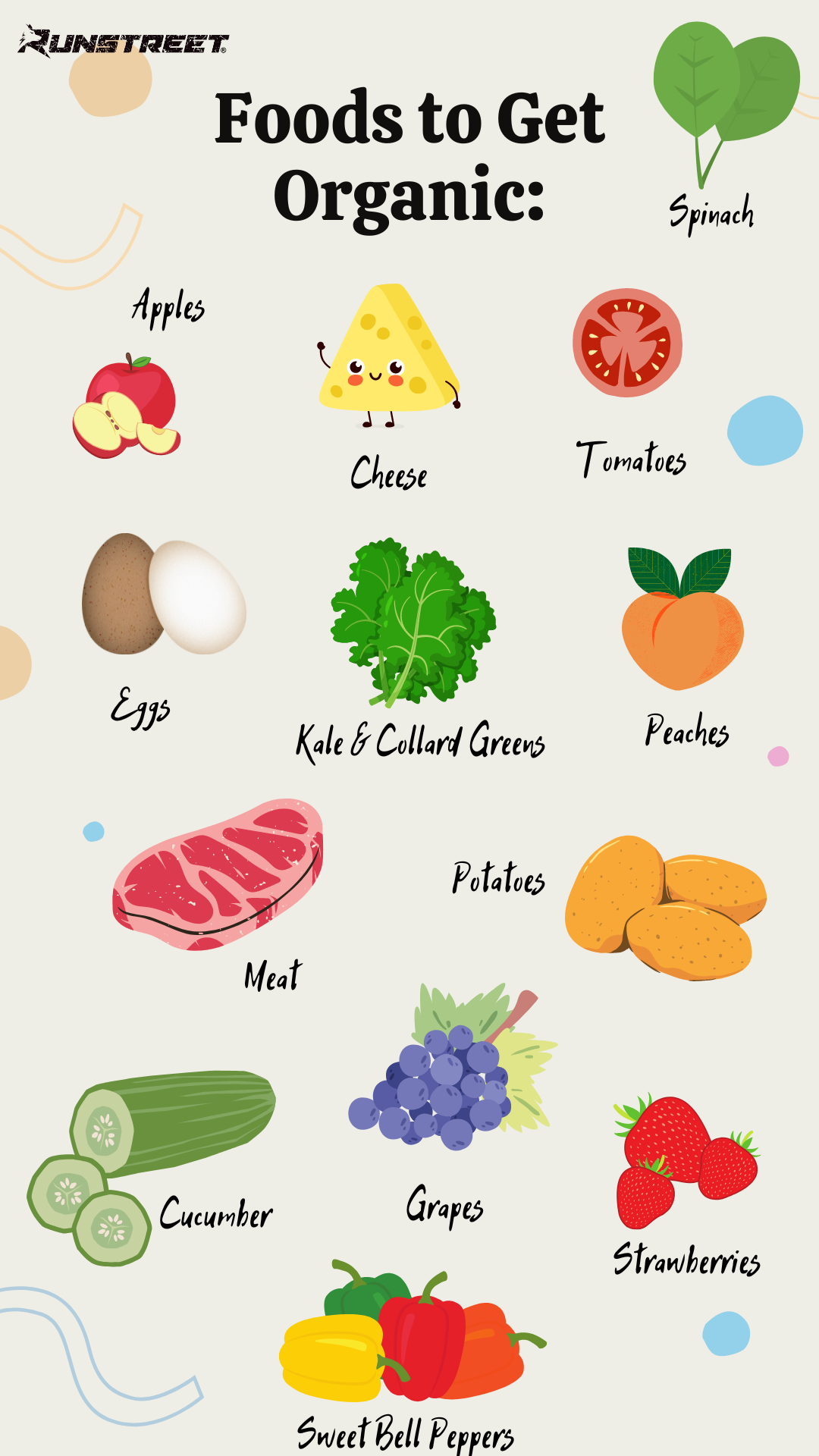
Most people associate organics with fruits, but organic products also include dairy, meat and poultry, as well as baked goods, personal care items, pet food and household cleaning supplies.
The USDA defines organic as crops that are grown according to federal standards. Farmers cannot use conventional (non-organic) methods to grow these foods. They can use approved natural pest control methods such as crop rotation, cover cropping and organic animal feed.
A farmer must also adhere to guidelines about how much fertilizer or pesticide he applies during the growing season. Also, he must rotate his fields between different crops. Farmers cannot use genetically modified organisms (GMOs), artificial growth hormones, synthetic insecticides, or synthetic fertilizers.
The requirements for organic fruits and vegetables are met if they are labeled 100 percent organic. Some farms don't label their products 100% organic, as it could confuse consumers. They will instead label their product "made with organic ingredients." "
What are organic products for the skin?
Organic skincare products contain no synthetic chemicals, including parabens. Phthalates, mineral oil. Petroleum jelly. Propylene glycol. sodium lauryl.sulphate. Talc. triclosan. Titanium dioxide. triethanolamine. vitamin A palmitate.
Organic skincare products don't contain artificial colours or fragrances.
They are designed to promote healthy skin, prevent premature wrinkles, heal injuries after they happen, and support overall wellbeing.
These are some standard terms you might come across when shopping for organic items:
- Paraben Free: These are chemicals that keep certain cosmetic products stable. However, they can be toxic if used in large quantities.
- Fragrance-Free: The product is free of essential oils or fragrances.
- Cruelty free - No animals were endangered during the manufacturing process.
- Natural Ingredients – The ingredient is naturally derived either from a plant or an animal.
- Vegetarian/Vegetarian- The ingredients are either vegan/vegetarian.
- Gluten-Free: This is when gluten was eliminated from the formulation.
- Non-Toxic – The product is free of toxins, carcinogens and other dangerous compounds that can harm your health.
- Biodegradable - The product will eventually be broken down into harmless parts when it is disposed of.
- Pesticide Free – There were no pesticides used during the harvesting or growing process.
- GMO-Free - this means that none of the ingredients in the product contains genetically modified organisms.
- Certified Organic is a certification that the ingredients of the recipe were grown using sustainable methods.
What are organic foods?
Organic produce can be grown without the use of pesticides or synthetic fertilizers. There is no use of growth hormones and no animal testing. These crops are allowed to grow naturally, so farmers do not use chemicals to prevent weeds or pests.
Organic farming practices preserve soil quality and help conserve water resources. Organics are also better for your health as they contain more nutrients that conventional food. Organic products tend to be higher in fiber and lower fat than conventionally produced foods.
Do organic foods have health benefits?
Some organic foods may not prove to be good for you. They can be beneficial for your health if you eat them often.
Organic food is made without pesticides or herbicides, hormones or genetic engineering. Organic produce is free from harmful chemicals that could cause harm to human health.
Additionally, organic products are less likely to contain additives during processing. Organic products are healthier than those that use additives during processing.
Research shows that organic produce contains more nutrients and antioxidants compared to conventionally grown fruit and vegetables.
Even though organic farming methods can be more costly than conventional farming methods they are often more productive. Organic farming promotes soil fertility as well as biodiversity.
This helps conserve water resources and protects against erosion. Organic farms do not require toxic chemicals to operate. They also use less energy and fuel.
Many people are concerned that organic food is more expensive than regular foods. Prices can vary depending on where you live. Organic apples, for example, are more expensive than regular apples.
But, if we look at the total cost of a combination of both types and fruits, we'll see organic is much cheaper.
Do you want to go organic?
It all depends on who you are. Organic food is not for you if you don’t like it.
However, if you enjoy good-tasting food, you can buy organic food. Organic foods are safer as most commercial growers use chemical fertilisers, pesticides, or genetically modified species (GMOs) to produce their crops.
Organic agriculture helps to protect the environment by conserving natural resources, and promoting biodiversity.
What are the benefits to organic farming?
Organic farming is a way for farmers to grow food naturally without the use chemicals. Organic farming is a way for farmers to produce food without using harmful pesticides.
Organic farming also permits for the use of natural fertilizers. These fertilizers are good for plants that are healthy and reduce chemical waste.
Organic farming can also be environmentally friendly. Organic farming is also environmentally friendly. Farmers often use composting to recycle nutrients back into their soil. This helps to reduce pollution and conserve valuable resources.
Organic farming can increase crop yields and help the environment. Because organic farming uses less water during the growing season, this is why it is so successful.
Organic production also means that farmers get higher prices for their products. People who are more conscious of the dangers of chemical fertilizers and pesticides will eat healthier food.
This raises the demand to produce organic food products. For these reasons, organic farming is becoming increasingly popular.
Statistics
- Once certified by the USDA, it can fall into one of four categories: "100 percent organic", "organic," "made with organic ingredients," or "made with less than 70 percent organic ingredients. (en.wikipedia.org)
- Popular clothing brands, like Patagonia, are labelled as organic by using 100 percent organic cotton for many of their styles. (en.wikipedia.org)
- Brands participating in this challenge are committed to using 100 percent sustainable cotton by 2025.[5] (en.wikipedia.org)
- Nutrients like omega-3 fatty acids were up to 50 percent higher in organic meats and milk than in conventionally raised products.[3] (en.wikipedia.org)
External Links
[TAG17]
- Organic food and impact on human health: Assessing the status quo and prospects of research - ScienceDirect
- Technical note: Simultaneous analysis of vitamin and carotenoid content in milk from cows fed total mixed rations. Xanthophyll detection is possible - ScienceDirect
[TAG20]
[TAG22]
[TAG25]
How To
Organic food: Are they healthier and better for you?
Organic foods are produced without the use of chemical pesticides and synthetic fertilizers. They are grown under natural conditions without artificial inputs such as fungicides, insecticides, herbicides, hormones, antibiotics, or genetic engineering. Organic farming practices include crop rotation and cover crops, the composting of animal manure, the recycling of wastewater, as well as integrated pest management (IPM).
The USDA National Organic Program (NOP), established in 2002 to regulate production, handling and processing of organic products sold in the United States. NOP regulations make sure that organic agricultural product conforms to the Federal Food, Drug, and Cosmetic Act. Additionally, organic products must not contain prohibited substances like pesticide residues or genetically modified organisms.
For producers in the USA who want their products "organic", there are two kinds of certification programs: one for farmers or ranchers and one for manufacturers. Both programs require that operations are audited annually to verify compliance with the strict standards. These services are offered by several certifying agencies, including CCOF Certified Organic Farmers & Ranchers and Quality Assurance International. The three organizations all provide verification by third parties that farms have followed strict guidelines for environmental stewardship as well as labour practices and the care of livestock.
According to USDA's Economic Research Service (ERS), organic agriculture accounted in 2013 for $4.7 Billion in sales. Retail spending on certified organic products reached nearly $1.5 Billion in 2013. This is a 23 per cent increase from 2009. During this time, grocery store sales increased by 12 percent. Spending on direct purchases of organic produce increased by 29 percent, while spending on meat, poultry, eggs, dairy, and seafood grew by only 1 percent.
Organic food is more expensive, but consumers believe its quality is worth the extra cost. Consumer Reports conducted a survey in 2015 and found that 88 percent of respondents would pay more for organic foods if they had higher nutritional value. Another study published in Health Affairs found that people who eat organic foods are less likely to suffer health problems like cancer, diabetes, obesity, asthma, heart disease, and depression.
There is no evidence to suggest eating organic foods can treat or prevent any diseases. However, some studies have suggested that they might be beneficial for your health as they may reduce your exposure of pesticides and contaminants. In 2010, a review that included 31 studies concluded that organically-raised beef had lower levels of parasites and toxic chemicals than conventionally reared beef. Similar conclusions were reached in a separate analysis of 11 other studies published in 2012.
According to a 2014 report by the Environmental Working Group, the incidence of foodborne disease caused by E.coli, salmonella or listeria monocytogenes, E. coli and E. coli O157H7 was lower when organic chicken, non-organic pork, beef, lamb and milk were compared. The group also noted that the incidence of human illnesses due to E. coli O157 declined among children and adults after 2006, when the USDA started requiring more stringent organic standards for animals raised for consumption.
Resources:
 |
[TAG28]10 Things DESTROYING Your Testosterone Levels! / 10 Habits KILLING Your Testosterone This video delves into ten everyday factors that can impact health and |
 |
[TAG29]Hi !! Today we are going on a tour of an Greek olive farm and a visit to the olive harvest. Throughout, we will learn about the benefits of olive oil, how to |
 |
[TAG30]There is an unexpected blue zone in the fast food homeland, the United States. In Loma Linda, the Christian faith has gained a strong grip, which may have |
 |
[TAG31]AZURE STANDARD HAUL BULK FOOD STORE SHOP BUDGET MEAL PREP FOOD STORAGE PANTRY TOUR LARGE FAMILY MEAL Check out Azure Standard HERE: https://www |
 |
[TAG32]Download the Fetch app now → https://sponsr.is/fetch_underthemedian_1123 and use the code UNDERTHEMEDIAN to get 1,000 points on your first receipt! Frugal |
 |
[TAG33]Organic Cultur |
 |
[TAG34]Prepare Pide With Halva in a New and Tasty Way! Village Life, Visiting Grandma! https://youtu.be/USUR-5mLDJ8 More videos about village life, see below in |
 |
[TAG35]Last week I tried doing this presentation live on Friday, November 17, as some of you witnessed. Due to technical difficulties, that didn't work out as planned. |
 |
[TAG36]From advantages like strengthening crops, insect resistance and being good for the environment to disadvantages like allergic reactions to outcrossing and more, |
 |
[TAG37]Sign up for Gary's Newsletter https://www.theultimatehuman.com Get more resources + information from Gary here - https: […] |
 |
[TAG38]'What I really like about the ZOE approach is that it's not a kind of restrictive list of do's and don'ts and things you're not supposed to eat. It's all about |
 |
[TAG39]Researched articles about eating Organic food |