.png)
For now, love yourself and enjoy this one ...
Frequently Asked Questions
How do you determine if food has been grown organically?
Fresh ingredients are essential for any chef. We feel better when our food is good.
The same applies to our food. We can identify exactly where and how organic foods were grown when we purchase them. We also know that organics were not treated with harmful chemicals.
Organic foods are produced without using synthetic pesticides, fertilizers, hormones, antibiotics, or genetically modified organisms (GMO). These substances are not allowed for organic farmers.
Growing organic crops is an art. There are many safe ways to grow them.
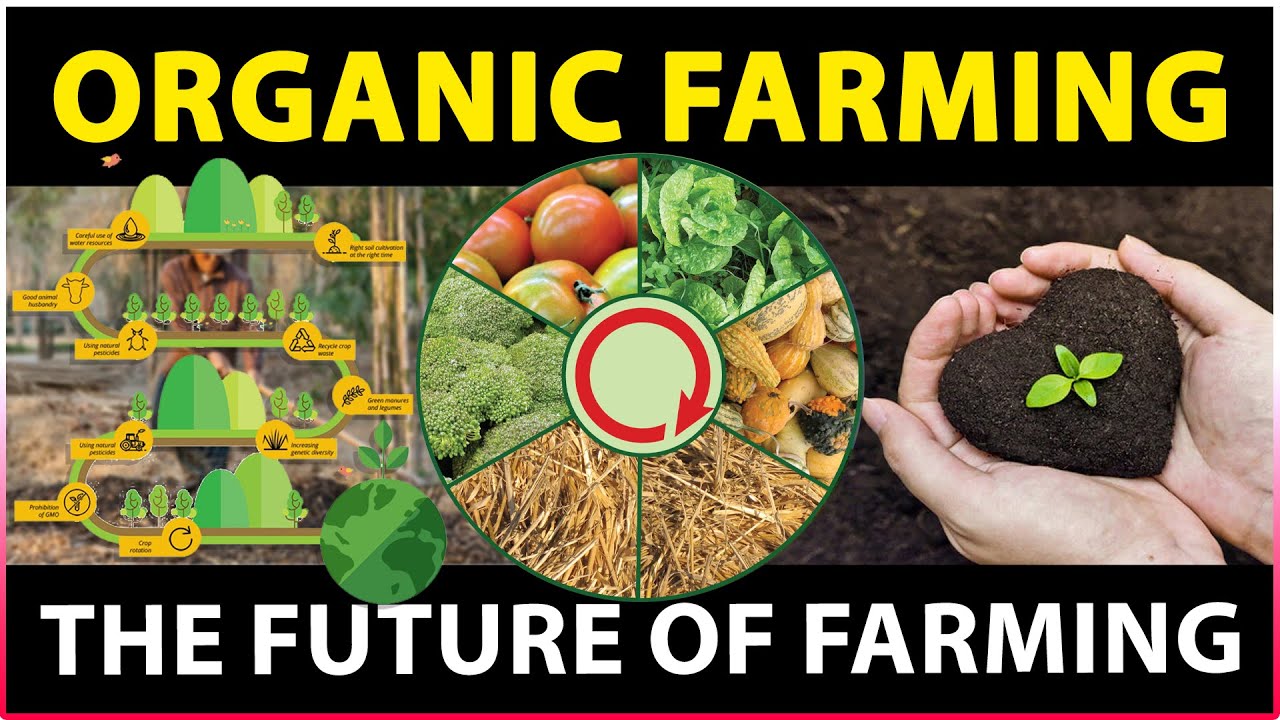
Sustainable agriculture is also known as organic farming. Organic farming is more sustainable than traditional methods and provides all the nutrients necessary to sustain life.
Organic farming practices include crop rotation, composting manure, cover cropping, and intercropping. These techniques reduce soil erosion and increase water quality.
They also reduce chemical runoff into waterways. We can also find organic farms in our urban surroundings.
There are two types certified programs for organic products. The USDA National Organic Program certifies the one while the independent certifying agency certifies the other. Both require strict compliance with organic standards.
USDA seals or O Seals can be applied to organic products. This symbol indicates that the product meets federal requirements.
What are the health benefits of organic farming
Organic farming provides farmers with a way of producing food without using chemicals. Farmers do not need to worry about harmful pesticides harming their crops or animals.
Organic farming also permits for the use of natural fertilizers. These fertilizers aid in the growth of healthy plants as well as reducing the amount chemical waste.
Organic farming is also environmentally friendly. Organic farming is also environmentally friendly. Farmers often use composting to recycle nutrients back into their soil. This reduces pollution and conserves valuable resources.
As well as helping the environment, organic farming increases crop yields. This is because there is much less water used during the growing season.
Organic production methods mean farmers can get higher prices. Healthier foods are demanded by consumers who are more aware of the dangers posed by pesticides and chemical fertilisers.
This drives up the demand for organic products. For these reasons, organic farming is becoming increasingly popular.
How can I determine if my produce was organic?
These are the labels you should look for to ensure you are purchasing organic produce
USDA Organic Certified- This product has been certified organic by the USDA.
Certified Naturally Grown - Produce that has passed strict requirements for organic practices but has not yet received certification from the USDA.
Pastured/Free Range – Produced from animals that live outdoors and graze on grasses or herbs.
These labels indicate whether the product meets certain criteria.
- There are no synthetic pesticides or fertilizers
- No genetically altered organisms
- The animal is never given antibiotics
- No hormones are ever given to the animal
- No growth-promoting medications
- No feed additives
- No artificial ingredients
- No irradiation
- No sewage effluent
- GMOs prohibited
- Never gave antibiotics
- No hormones ever given
- No growth-promoting drugs
- No feed-additives
- No artificial ingredients
- No sewage effluent (if it isn't a GMO).
- No irradiation
I hope this article was helpful!
Statistics
- When packaged products indicate they are “made with organic [specific ingredient or food group],” they contain at least 70% organically produced ingredients. (usda.gov)
- Cosmetic brands such as Laurel and Rose Mira are 100 percent organic and have a wide array of skincare products. (en.wikipedia.org)
- According to a study performed by consumerreports.org, organic products, compared to non-organic products, ranged anywhere from 13 percent cheaper to 303 percent more expensive. (en.wikipedia.org)
- Brands participating in this challenge are committed to using 100 percent sustainable cotton by 2025.[5] (en.wikipedia.org)
External Links
[TAG17]
- PubMed Evaluation of the micronutrients in plant foods made by conventional and organic farming methods.
- Comparison of the total amount of phenolic and/or ascorbic acids in freeze-dried and dried marionberry, strawberry, or corn grown using conventional and organic agricultural practices - PubMed
[TAG20]
- EWG's 2022 Shopper’s Guide to pesticides in produce
- Clean Fifteen(tm), Conventional Produce With the Least Pesticides
[TAG23]
- Organic food and its impact on human well-being: ScienceDirect assesses the status quo as well as future research prospects
- Technical note: Simultaneous Vitamin and Carotenoid Analysis of Milk from Total Mixed Ratio-Fed Cows - ScienceDirect
[TAG26]
- Organic Industry Survey
- U.S. sales of organic products soared to new heights, reaching nearly $62Billion in 2020
How To
Organic foods are healthier and more nutritious.
Organic foods are produced without the use of chemical pesticides and synthetic fertilizers. They are grown naturally without artificial inputs such pesticides and herbicides. Organic farming practices include crop rotation, cover crops, composting animal manure, recycling wastewater, and integrated pest management (IPM).
In 2002, USDA National Organic Programs (NOP) were established to regulate the production and handling of organic products that are sold in the United States. NOP regulations make sure that organic agricultural product conforms to the Federal Food, Drug, and Cosmetic Act. In addition, the NOP rules mandate that organic products must be free from prohibited substances, including pesticide residues, veterinary drugs, growth hormones, genetically modified organisms, irradiation, sewage sludge, industrial waste, and heavy metals.
In the U.S., there are two types of certification programs available for producers who want their products labelled "organic": one for farmers and ranchers and another for manufacturers. Both programs require an annual audit of the operations in order to confirm compliance with stringent standards. There are several certifying organizations that offer these services. These include the CCOF Certified Organic Farmers & Ranchers as well as Quality Assurance International and the American Grassfed Association. The three organizations all provide verification by third parties that farms have followed strict guidelines for environmental stewardship as well as labour practices and the care of livestock.
According to USDA’s Economic Research Service, organic farming accounted for $4.7Billion in 2013 sales. That year, retail spending on certified organic products totalled nearly $1.5 billion, representing a 23 percent increase since 2009. Sales at grocery stores were up 12 percent during this period. Spending on organic produce directly increased by 29.9%, while meat, poultry eggs, and seafood spending grew only by 1%.
Although organic food can be more expensive than regular food, many consumers feel that its quality is well worth the additional cost. According to a 2015 survey conducted by Consumer Reports, 88 percent of respondents said they would pay more for organic food if it meant higher nutritional value. Another study published in Health Affairs found that people who eat organic foods are less likely to suffer health problems like cancer, diabetes, obesity, asthma, heart disease, and depression.
While there is no evidence that organic food can prevent or treat any diseases, there are some studies suggesting that eating them may improve your overall health by reducing your exposure to pesticides and other contaminants. In 2010, a review that included 31 studies concluded that organically-raised beef had lower levels of parasites and toxic chemicals than conventionally reared beef. A separate analysis of eleven studies published in 2012 led to similar conclusions.
The Environmental Working Group released a report in 2014 that analyzed data from USDA's Agricultural Marketing Resource Center. They found that there was a decrease in foodborne illness due to E.coli, salmonella, listeria moncytogenes or campylobacter. The Environmental Working Group also found that E.coli O157 has been associated with fewer human illnesses in children and adults since 2006, when USDA began requiring stricter organic standards for animal production.
Resources:
 |
[TAG29]On this year's hottest day I'm doing a stock-take of my food; both stored (frozen and in the cupboard) and fresh to come from the garden. I've grown a little |
 |
[TAG30]What are omega 3 eggs and their health benefits | Info Learning Plus #eggs #omega3_Eggs Omega-3 eggs are produced by chickens that are fed a diet rich in |
 |
[TAG31]Welcome to India's first Health Podcast "What the Health!" In the finale of our first season, we had an insightful and enlightening conversation with Pooja |
 |
[TAG32]I Only DRINK THESE TOP 2 GREEN DRINK To CONQUER AGING! (71 Year Young) Pauline Adeleke 0:00 - Introduction 0:03 - The importance of nutrition for overall |
 |
[TAG33]Hey Gotchers! Have you ever wondered how Wednesday and Enid spend their summer☀️? We decided to check it out, and it turned out that even on vacation, they |
 |
[TAG34]Organic Cultur |
 |
[TAG35]Sometimes the scientific method takes us to new frontiers. I started a company called CrunchLabs where we build a toy together and then I teach you all |
 |
[TAG36]David Sinclair's Latest Book on Longevity https://amzn.to/3Euaj95 "Lifespan: Why We Age―and Why We Don't Have To" Timestamps 0:00 Start 1:07 One Simple |
 |
[TAG37]Hey guys! Today's video is another 'what I eat in a day' to give you ideas for tasty plant based meals. I'm not perfect, I'm still learning and I make mistakes |
 |
[TAG38]Various studies now find these things are loaded with endocrine disrupting chemicals. Support your body's Glutathione Synthesis* with the new NAC + Glycine |
 |
[TAG39]sten ekberg presents a new way to think about treating cancer and other diseases: anti-angiogenesis, preventing the growth of blood vessels that feed a tumor. |
 |
[TAG40]Researched articles about eating Organic food |